
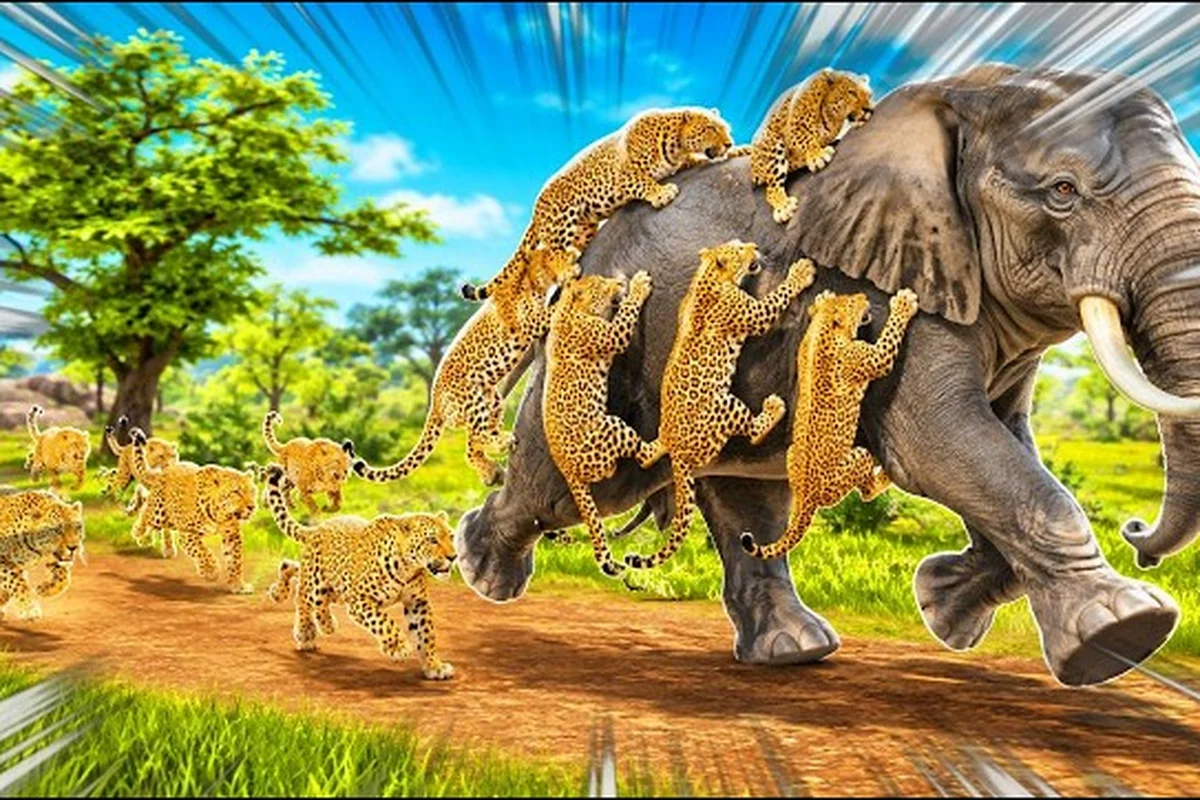
Choosing between a solo run and a full pride in the savanna comes down to more than preference — it changes which animals scale, which badges unlock, and how fast the coin wallet grows. This guide lays out the full savannah life solitary vs group animals tradeoff, so a new player can pick a path that matches their playstyle instead of grinding the wrong roster.
The official NOYO Productions species page splits the roster cleanly: prides, packs, herds, and flocks are tuned around coordinated play, while leopards and crocodiles are built around silent, one-on-one ambushes. That same split shows up everywhere else in the game — from how hunger and thirst timers feel, to which Savannah Life on Roblox badges a player can realistically chase, to which coin routes pay the best return per minute.
How Savannah Life Designs Solitary and Group Animals
The animal roster is not a single difficulty curve — it is two design philosophies sitting on top of the same map, and every other system in the game is wired to that split. Understanding it is the first step in any savannah life pride guide worth reading.
The Two Design Buckets
| Design Bucket | Example Animals | Core Strength | Core Weakness |
|---|---|---|---|
| Group-Tuned | Lion, Hyena, Wild Dog, Elephant (herd) | Compounding damage, territory control, shared XP | Needs active group members online to scale |
| Solitary-Tuned | Leopard, Crocodile, Cheetah (lone hunts) | Burst damage, ambush kill windows, full loot retention | No fallback if the ambush fails |
According to the official species descriptions, group-tuned animals are built to stack buffs when multiple members operate near the same watering hole, while solitary-tuned animals are designed around single-target kill windows that reward positioning over numbers. The result is two very different loops: pride play is about coordination, and lone play is about patience.
Why the Engine Treats Them Differently
The grouping system in the game feeds several downstream mechanics: the pride stacking bonus that adds damage per active member, the Full House badge that requires 15 grouped members, and the shared kill XP curve that scales with party size. None of those levers matter to a lone leopard running tall-grass corridors, but every one of them matters to a pride.
Players who want to test both philosophies in the same session can switch animals at any respawn, so the "solitary or group" question is really a question about the next 30 minutes of play, not a permanent class choice. That quick-cycle respawn system means a lone leopard at 1200 HP testing a tall-grass ambush can die, respawn as a lioness, and immediately re-enter the same pride stack rotation without any class-locked progression penalty. Since family badges like the Full House (15 members) and shared kill XP curves only accumulate while grouped, a player weighing the trade-off can literally A/B test the pride-stacking damage bonus against a stealth solo clear inside a single sitting, making the experiment cost almost nothing beyond respawn travel time.
Pride Life: What Group Play Actually Gives You
Joining or forming a pride in savannah life families content is not a cosmetic decision. The pride is the only social structure that gates the most exclusive group rewards, and the math behind it favors players who treat it as a daily habit rather than a one-off experiment.
The Group Reward Stack
| Reward Source | Trigger | Payoff |
|---|---|---|
| 500-Coin Group Bonus | All members near the same kill or watering hole | Lump sum split, but solo players get nothing |
| Pride Stacking Damage | Active pride members within range | +25% bite damage per member (lion) |
| Full House Badge | Sustained 15-member group session | Permanent profile badge + cosmetics |
| Cooperative Egg Defense | Group defends a nesting site | Bonus cubs + rare skin drop chance |
The 500-coin group bonus is the single most consistent group reward in the game, and it stacks with the 10% NOYO group bonus and the 1.5x coin gamepass when all three are active. A solo player chasing the same hourly coin target has to grind twice as long to keep up.
The Pride Stacking Math
For lions specifically, the pride stacking system multiplies individual bite damage by +25% per active member. In a full five-member pride that compounds to a roughly 2.5x damage curve at the central watering hole, which is why coordinated patrols outperform solo lions almost every engagement. Players who want the full breakdown can read more in the savannah life family guide, which walks through the pride formation flow step by step.
Why Social Players Pick Pride Life
Social players consistently report that pride play feels less punishing than solo, because the group tank role (often elephant or hippo) absorbs the aggro while the lion or wild dog pack closes the kill. According to community reports, groups that rotate the central watering hole together hit the Full House badge about three times faster than random matchmaking groups, because the stacking math is more consistent when the same five players patrol in formation.
The Solitary Run: How Lone Animals Actually Win
The solo path is not a punishment for antisocial players — it is a tuned alternative with its own coin curve, badge track, and kill windows. Treating it as the "weak" option is the most common mistake new players make, and it usually costs them the fastest coin route in the game.
What Solitary Players Keep
| Solitary Benefit | Mechanic | Why It Matters |
|---|---|---|
| Full Loot Retention | No split on shared kills | Every coin from a downed herbivore stays with the killer |
| Ambush Damage Bonus | Tall-grass or river death-roll window | Burst damage skips the long chase stamina drain |
| Flexible Schedule | No group coordination required | Log in for 15 minutes, get a full route, log out |
| Predator Escape Badge Path | Survive solo predator encounters | A badge group players skip entirely |
The predator escape badge is the clearest example of a reward the solo path unlocks that group players rarely touch. Surviving a solo crocodile or leopard encounter long enough to break line of sight requires map knowledge, stamina management, and timing that pride play simply does not demand.
The Leopard and Crocodile Niche
Leopards and crocodiles are the two flagship solitary animals, and both are tuned for one-shot windows rather than sustained fights. A leopard that lands a tall-grass critical on a lone herbivore can chain two more before the prey registers the threat, while a crocodile at the river crossing can drag a mid-weight animal in with a single death-roll. Players who main these two are essentially running a different game from pride players, and the savannah life pride wars guide has a full breakdown of how this plays out in contested territory.
The Cost of Going Solo
The honest trade-off is survival pressure. A solo player at the watering hole during peak hours is a target for any pride that wanders into range, and there is no backup to peel aggro. Community testing suggests that solo players spend roughly 20–30% more time repositioning to avoid contested zones than pride players do, which is the real time cost of the freedom.
Savannah Life Mother and Cubs: Family Play as a Third Path
Mother and cub play is a hybrid that sits between the two extremes, and it is the path that unlocks the most family-specific content. Raising cubs is a long-term loop, but the badge and roleplay payoff is unique to it.
What the Cub-Rearing Loop Includes
| Phase | What Happens | Group or Solo? |
|---|---|---|
| Nest / Burrow Setup | Mother finds a defended zone and lays | Either, but safer in a group |
| Cub Stage (0–30 min) | Cubs follow mother, learn movement | Group protects while mother leads |
| Juvenile Stage | Cubs start hunting, take small prey | Either, mixed pack recommended |
| Full House Badge Trigger | Sustained 15-member family group | Group only |
The cub-rearing phase is one of the few loops that genuinely benefits from a small group without requiring a full pride. A 3–5 player family that includes a tank role (elephant or hippo) and a damage role (lion or wild dog) can run the cub loop with almost no losses, because the tank peels the aggro while the mother leads the cubs to the next food source.
Why Family Badges Reward Group Play
| Badge | Requirement | Group or Solo? |
|---|---|---|
| Full House | 15 grouped members in one session | Group only |
| Mother and Cubs | Raise a cub to juvenile stage | Either, but safer in a group |
| Pride Leader | Lead a pride through a territory war | Group only |
| Predator Escape | Survive a solo apex encounter | Solo only |
The badge track is the clearest signal of which path the game wants each player on. According to the official Savannah Life Roblox page, the Full House badge is the social milestone of the game, and it is impossible to earn solo. A player who wants the badge roster complete will eventually have to spend time in a group, even if their main loop is solo.
Choosing the Right Playstyle by Player Goal
The "should I go solo or join a pride" question usually resolves itself once a player picks a goal, because each Savannah Life playstyle inverts the cost-benefit math: a solo lion chasing mother and cubs family badges keeps 100% of den XP but caps out near Badge Tier 6, while a full pride splits that XP across up to 8 members yet unlocks the Tier 9+ group rewards that solo animals literally cannot trigger, making families the only realistic path to the Pride Leader title.
Goal-Based Recommendations
| Player Goal | Recommended Path | Why |
|---|---|---|
| Fastest Coin Farm | Solo (leopard/crocodile) | Keeps 100% of loot, no split |
| Badge Completion | Group (5+ member pride) | Full House + family badges require it |
| PvP / Pride Wars | Group (lion lead, hippo tank) | Pride stacking math wins fights |
| Roleplay / Family Loop | Small group (3–5 family) | Cub safety + story immersion |
| Casual 15-min Sessions | Solo | No coordination cost per session |
Players who bounce between goals will end up playing both paths in the same week, and the savannah life how to lay eggs guide is the natural next read for anyone whose session shifts into family play rather than a one-session experiment.
Reading the Server You Joined
Every server in the game leans one direction or the other, and reading the lobby before committing to a path saves time. A server with 4–5 active prides patrolling the central watering hole is a hostile environment for solo herbivores and a coin-rich hunting ground for a leopard running tall-grass corridors. A quiet server with mostly solo players is a pride-building opportunity, because the Full House badge is much easier to coordinate in a low-population lobby where the same five players stick together for a full session.
The Savannah Life survivor badges guide is a useful companion read here, because the survival badge track rewards a different play pattern — long, safe sessions — that pairs well with the slower pride-building approach on quiet servers, where group incentives are weakest during the opening minutes.
How the Meta Has Shifted Between Solo and Group Play
Recent patches have nudged the balance in both directions, and the current meta rewards players who can flex between paths rather than commit to one permanently — a lone hunter switching to pride defense during a mother-and-cubs escort, or a pride member peeling off for a solitary stealth takedown when threat numbers drop, often decides the match more reliably than raw stats. Family badge loadouts now grant conditional bonuses that only activate when allies are nearby, so even dedicated solo players benefit from the occasional group rotation to keep their savannah life family badge progression from stalling.
Recent Balance Notes
| Patch Direction | Solitary Impact | Group Impact |
|---|---|---|
| Tall-grass buff to leopard | +15% ambush damage | Pride players face harder counter-ambushes |
| Pride stacking tuning | No change | Slightly slower scaling at 5+ members |
| Watering hole rotation timer | Contested zones are spicier | Pride coordination matters more |
| Full House badge tracking fix | No change | Easier to credit for the same session |
According to community reports, the most recent balance pass made solo leopard play noticeably more rewarding in contested zones, which has pulled some pride players back into mixed play. The savannah life pride guide content has not changed dramatically, but the optimal 30-minute session for a new player now often includes 15 minutes of solo leopard and 15 minutes of pride rotation.
Practical Tips for Switching Between Paths
Players who treat the solo path and the pride route as a scheduled routine—not an impulse swap—tend to log better mother and cubs bonding progress, steadier family badge upgrades, and steadier group reward payouts. A workable rhythm is two solo hunts for every one pride co-op session, which keeps your solitary skill decay low and your pride guide reputation climbing in parallel.
Solo-to-Group Switching Tips
-
Keep a pride invite cached so the switch from solo to group takes seconds, not minutes
-
Run solo routes during off-peak hours to avoid contested watering holes
-
Stack the 1.5x coin gamepass on solo sessions to offset the no-group-bonus loss
-
Use pride sessions for the Full House badge push, not for general coin farming
-
Rotate to elephant or hippo as the pride tank if the pride is missing a front liner
Group-to-Solo Switching Tips
-
Run tall-grass corridors as leopard immediately after a pride session to clear the head
-
Stack predator escape badge attempts during solo windows
-
Avoid the central watering hole for the first 10 minutes after leaving a pride
-
Use the Q drinking loop between solo kills to regen without exposing position
The savannah life roblox guide covers the Q drinking loop and other stamina-management basics that make solo play more efficient, and it is worth a read for any player whose solo sessions are getting cut short by stamina drain between water sources.
The Verdict: Which Path Should New Players Pick First
New players who do not yet know which path fits them should default to group play for the first 5–10 hours, because the pride stacking math, the 500-coin group bonus, and the Full House badge all hit during that window and never repeat as efficiently. Once the social milestones are banked, a switch to solo leopard or crocodile play opens the predator escape badge path and the higher per-hour coin curve that comes with full loot retention.
Players who already know they prefer lone-wolf play can skip the social phase and head straight to the tall-grass and river corridors, but they should plan a short group session per week to keep the family badge track moving. The savannah life solitary vs group animals tradeoff is not a permanent fork — it is a toggle, and the best players in the game use both.
Frequently Asked Questions
Should I join a pride or play solo in Savannah Life as a new player?
New players should join a pride for the first 5–10 hours because the 500-coin group bonus, the pride stacking damage, and the Full House badge all hit fastest during the early grind. Solo play is more efficient per hour once those milestones are banked, but the early social window never repeats at the same return.
What is the difference between solitary and group animals in Savannah Life?
Group animals like the lion, hyena, and elephant are tuned around stacking buffs that compound when multiple members patrol the same zone, while solitary animals like the leopard and crocodile are tuned around burst-damage ambush windows that reward positioning over numbers. According to the official species page, the two paths use the same map but very different loops.
Can I earn the Full House badge without playing in a group?
No, the Full House badge is locked behind a sustained 15-member group session, and no solo animal — including the leopard or crocodile — can trigger the 15-stack pride buff that triggers the badge pop on session end. Players who want every entry in their badge roster, including the family badge track crossovers, will need to spend at least one pride rotation regardless of whether their main loadout is built for the savannah life solitary vs group animals split.
Do solo animals earn more coins than group animals in Savannah Life?
Solo animals keep 100% of their kill loot with no split, so the per-hour coin curve is usually higher for a skilled leopard or crocodile player. However, group players stack the 500-coin group bonus, the 10% NOYO bonus, and the 1.5x coin gamepass together, so a coordinated pride can outpace a solo run on a good rotation.
Is the mother and cubs loop worth the time investment in Savannah Life?
The mother and cubs loop is worth it for players who care about the family badge track and the roleplay immersion, because the cub-rearing phase unlocks the Mother and Cubs badge and a small set of cosmetics that group-only players miss. It is less efficient for raw coin farming, so most players run it on weekends or during off-peak server hours.