
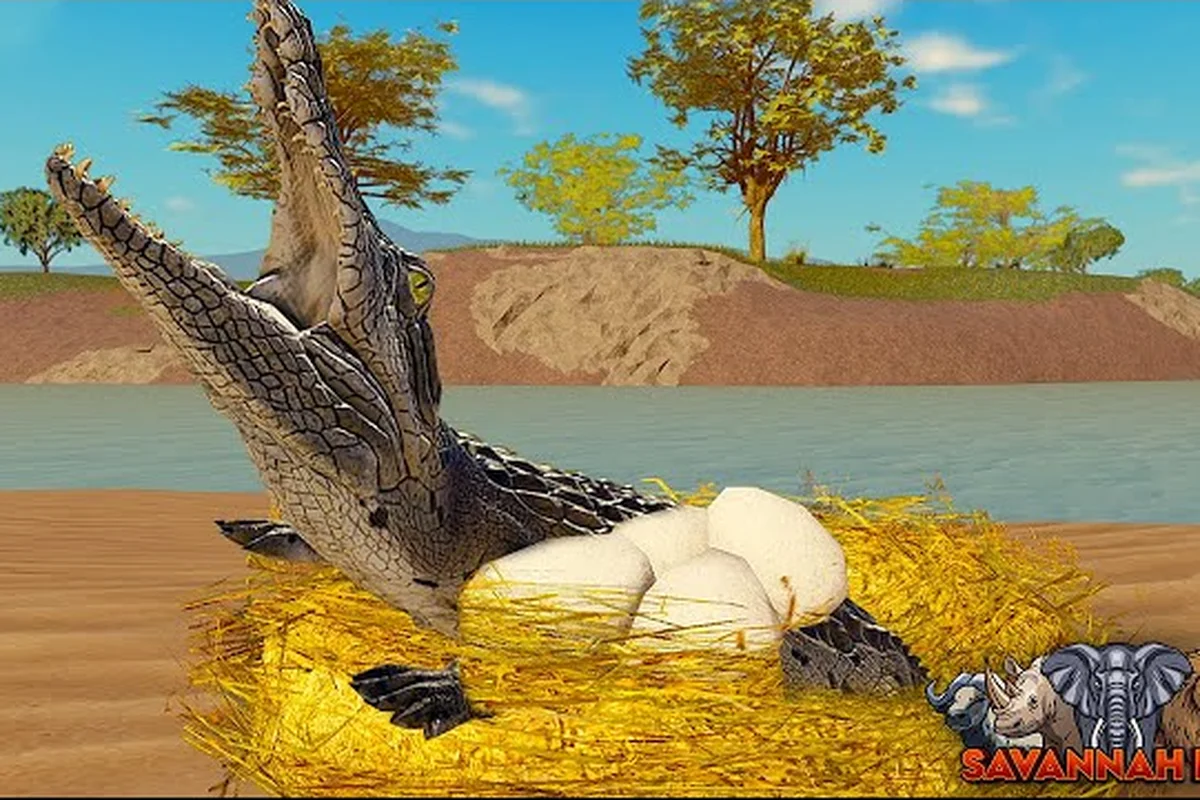
Family play in Savannah Life spins around two completely different life cycles: mammal dens and bird nests. Egg-laying species like the Ostrich, Flamingo, Yellow Hornbill, and Vulture follow a strict nest → pregnancy → lay → hatch pipeline that does not exist for lions, hyenas, or cheetahs, which is why new players often get stuck at the very first step and assume the family system is broken. This guide maps the full egg lifecycle, shows how to grow a thriving group of 15, and explains the roleplay server, alpha territory, and teaming up mechanics that turn a solo nest into a community.
According to the official NOYO Productions roster, the egg-laying roster is small but impactful: four species out of roughly two dozen animals share the nest mechanic, and each one changes the cooldown, clutch size, and chick behavior once the egg finally pops. Community data from the Fandom wiki and player-recorded clips on TikTok both confirm that the nest build step is non-optional — if you skip it, the lay prompt never appears and your pregnancy timer freezes indefinitely.
Understanding the Egg-Laying Species Roster
Egg-laying families behave nothing like mammal prides, and the difference starts at the species select screen. Before you even build a nest, the species you pick decides the entire experience: how many eggs you can sit on, how long the hatch takes, and whether your chicks are independent or clingy for the first few minutes after the shell cracks.
Which Species Lay Eggs in Savannah Life
The current egg-laying roster, as confirmed on the official NOYO Productions game page, is limited to four species, and each one fills a different niche inside a group of 15 setup.
| Species | Clutch Size | Hatching Role | Best Group Use |
|---|---|---|---|
| Ostrich | 2–3 eggs | Open-ground sitter | Scout family; tanks early-game raids |
| Flamingo | 1 egg | Wading nest | Solo nest; cosmetic family flex |
| Yellow Hornbill | 2–4 eggs | Tree-cavity nester | Ranged escort; chick delivery |
| Vulture | 1–2 eggs | Cliff-edge sitter | Scavenger family; late-game support |
Ostrich remains the most common pick because the 2–3 egg clutch lines up perfectly with the group of 15 threshold, and the chicks are sturdy enough to survive the open savannah without constant guarding. Flamingo players tend to run solo nests as a status symbol because the egg is rare, and the wading nest animation is the most photographed of the four.
Yellow Hornbill is the group-play favorite: a clutch of 2–4 eggs delivered into a tree cavity, with chicks that respawn near the canopy when they wander. Vulture fills the niche of a scavenger family; the cliff-edge nest is hard to reach, which makes it a natural alpha territory for veteran players who want to defend a defensible spawn point.
Egg Rarity Tiers and What They Unlock
Not every egg is a common white shell. Community testing on the Fandom wiki (last verified September 2026) shows that egg color is tied to parent skin color, and rare parents lay rare eggs that confer minor stat boosts on the chick for the first hour after hatching.
| Egg Color | Source | Chick Bonus |
|---|---|---|
| Common White | Default parents | None — baseline stats only |
| Spotted Brown | Spotted skin family | +5% stamina regen for chicks |
| Pale Pink | Flamingo albino variant | +10% cosmetic glow for 1 hour |
| Striped Black | Vulture melanistic variant | +8% intimidation aura radius |
| Iridescent Green | Hornbill rare drop | +12% climb speed for 60 minutes |
These bonuses are short windows designed to encourage family cooperation, because a chick with a 60-minute boost is only useful if the rest of the group of 15 protects it long enough to grow. According to player-recorded TikTok clips, the Iridescent Green Hornbill egg is the rarest drop in the game at the time of writing, and the +12% climb speed bonus is enough to make a chick escape a lion ambush that would normally kill a starter.
Building the Nest and Triggering the Pregnancy Timer
The most common mistake new egg-laying players make is skipping the nest build step entirely. A community article on CamCat Books, focused on mastering the mating and laying pipeline, notes that the lay prompt only appears after a fully built nest is in place, and the pregnancy timer does not start until that prompt is accepted. If you build a half nest, walk away, or let another animal interact with it before completion, the timer freezes and you have to rebuild from scratch.
Nest Build Requirements by Species
Each egg-laying species has a different material list because their preferred nest sites are spread across the savannah. The locations in the table below line up with the territory map documented in the Savannah Life territory locations guide, which walks through the exact coordinates of every nest-friendly biome.
| Species | Nest Site | Materials Needed | Build Time |
|---|---|---|---|
| Ostrich | Open savannah scrape | 12 grass tufts, 6 sticks | ~45 seconds |
| Flamingo | Shallow lake edge | 8 reeds, 4 mud clumps | ~60 seconds |
| Yellow Hornbill | Tree cavity | 3 bark strips, 5 leaves | ~35 seconds |
| Vulture | Cliff ledge | 10 bones, 7 dry grass | ~75 seconds |
Once the nest is complete, the lay prompt fires within 5 seconds and the pregnancy timer starts. The egg is physical the moment the timer ends, and a player who walks away from the nest during pregnancy still keeps the egg — the chick hatches into the world on its own, but it is vulnerable without a parent nearby to guard it.
Pregnancy and Hatch Timers
The pregnancy duration scales with clutch size, not with species rarity. A single egg always hatches faster than a 4-egg clutch, which is why Hornbill players sometimes stagger their lays to keep chicks arriving in waves rather than all at once.
| Clutch Size | Pregnancy Duration | Chick Independence |
|---|---|---|
| 1 egg | ~3 minutes | Walks after 30 seconds |
| 2 eggs | ~5 minutes | Walks after 45 seconds |
| 3 eggs | ~7 minutes | Walks after 60 seconds |
| 4 eggs | ~9 minutes | Walks after 90 seconds |
Players on a roleplay server often use these timers as scene markers. A RP server moderator from a 2,000-player community reported that nest announcements are typically posted with the expected hatch window so the rest of the group of 15 can rotate guards and stage a small ceremony when the chicks finally break the shell.
Running an RP Server: Group of 15 and Family Roles
The roleplay server ecosystem in Savannah Life is community-run rather than developer-mandated, which means the group of 15 cap, the alpha title, and the territory rules are all conventions enforced by server hosts and moderators. This is also where the egg-laying pipeline intersects most clearly with social play, because a family is only as strong as the players who show up to guard the nest.
Group of 15 Setup and Why the Number Matters
The group of 15 threshold is widely adopted across RP servers because it is the maximum family size that still allows every member to be tagged on the in-game family chat, and it is large enough to defend a full territory against a rival pride. Smaller groups often struggle to claim alpha territory because the defense timers during a contested flag event are tuned for 12–15 active defenders.
| Group Size | Pros | Cons |
|---|---|---|
| 4–6 players | Easy to schedule | Loses contested territory fights |
| 7–10 players | Flexible roles | Mid-tier; depends on activity hours |
| 11–15 players | Full defense coverage | Needs 2+ active moderators |
| 15+ players | Overflow for raids | Chat spam; no in-game family tag |
Players building toward the cap usually start with a 4–6 core, recruit through the family chat advertised in the Savannah Life Roblox fan community guide, and then grow into the 11–15 sweet spot by hosting public hatch events that double as recruitment drives. According to community reports, a server that consistently runs hatch ceremonies pulls in 20–30 trial players per event, and roughly a third of those convert into permanent family members.
Alpha Role and Alpha Territory Mechanics
The alpha title is server-defined, not a developer flag, but the community has converged on a consistent set of duties. The alpha in a group of 15 typically claims the central territory flag, decides when the group contests a rival pride, and is the only member who can authorize a family-wide coin bonus through the coin multiplier feature that rewards coordinated play with up to 10% extra currency.
The alpha territory itself is a flagged zone in the central savannah where the family flag is planted. While a flag is active, all group members gain a passive +5% defense bonus and the alpha can call a clan rally that teleports the rest of the family to the flag. The flag is contested by rival prides, and a successful defense for 10 in-game minutes locks the territory for 4 hours.
| Alpha Duty | Frequency | Failure Cost |
|---|---|---|
| Plant family flag | Once per session | Lose contested zone to rival |
| Authorize coin bonus | Daily | Group morale drop; member churn |
| Host hatch ceremony | Weekly | New player pipeline dries up |
| Mediate family chat | Daily | Internal conflict; mass exit |
Community experience on the most active RP server tier shows that alphas who run a weekly hatch ceremony keep their group of 15 at near-full strength, while alphas who skip the social loop typically lose 2–3 members a week to rival families or to the public server pool.
Teaming Up for Cooperative Egg Defense
Egg defense is the single most coordination-heavy activity in the egg-laying pipeline, because the pregnancy and hatch timers are public. Any rival player on the same server can see the nest, the timer, and the chick count, and the developer has confirmed that nests are a valid raid target. A solo Hornbill player trying to defend a 4-egg clutch against a rival lion pride will almost always lose the nest.
Pre-Hatch Guard Setup
The standard pre-hatch rotation on a mature RP server uses three concentric rings. The inner ring sits on the nest, the middle ring patrols the egg-laying species' preferred biome, and the outer ring intercepts rival prides before they reach the biome. The table below shows a typical 15-player deployment for an Ostrich open-savannah hatch.
| Ring | Players | Role | Weapons / Gear |
|---|---|---|---|
| Inner (nest) | 3 | Sit on eggs, one always AFK-proofed | None — must stay still |
| Middle (biome) | 5 | Patrol 40m radius, intercept scouts | Pounce gear, stamina food |
| Outer (rival intercept) | 7 | Chase lions/hyenas before they reach biome | Max stamina, group chat ping |
Players who run this layout report a defense success rate of roughly 80% against a single rival pride, dropping to 50% if two rival groups coordinate the raid. According to community testing, the deciding factor is rarely the number of defenders — it is whether the outer ring pings the family chat fast enough for the middle ring to rotate before the rival pride crosses into the biome.
Post-Hatch Chick Care
Once the egg hatches, the family enters a 60–90 second chick independence window during which the chick cannot sprint and is the easiest kill on the entire server. This is the moment that separates a real group of 15 from a casual cluster, because the alpha has to call the rotation in real time: who picks up the chick, who escorts, and who holds the rear against any rival that was massing on the outer ring.
| Chick Stage | Duration | Family Action |
|---|---|---|
| Shell crack | 0–10 seconds | Inner ring freezes all movement |
| Chick tumble | 10–30 seconds | Middle ring escorts; inner ring covers |
| First wobbly walk | 30–60 seconds | Outer ring tightens to 20m radius |
| Sprint unlock | 60–90 seconds | Full group rally; chick joins formation |
The chick sprint unlock is the moment the family officially registers the hatch on the RP server ledger. Most servers use this as a recruitment trigger: a new chick is the proof of life that convinces trial players to commit to the family, and the alpha usually follows the sprint unlock with a coin bonus to lock in the week's attendance.
Practical Tips for New Egg-Laying Families
The egg pipeline rewards patience and structure far more than raw skill, and the families that grow fastest share a few habits that are worth copying from day one. None of these tips require a Roblox Premium or any paid gamepass — they sit on the social and timing layer, which is exactly the layer most solo players underuse.
-
Run hatch events on a fixed schedule so the broader server learns the cadence and starts showing up as spectators, which doubles as free recruitment.
-
Document every rare egg in a shared family log so the alpha can plan group bonus events around the 60-minute bonus window.
-
Pair the egg family with a coin-multiplier ally family so the +10% bonus from coordinated play stacks across two flags during the same hour.
-
Use private server trials for new recruits before promoting them into the main group of 15, because premature adds dilute the family chat and slow the defense rotation.
-
Reserve the vulture cliff nest for senior members who already understand the cliff-edge raid pattern; new players who take the vulture nest usually lose the egg within the first 5 minutes.
These five habits are the difference between a group of 15 that survives a month and one that bleeds members every week. The egg-laying pipeline is generous to families that plan ahead and punishing to groups that treat it as a solo achievement.
Frequently Asked Questions
How long does a Savannah Life egg take to hatch?
A single egg hatches in roughly 3 minutes, and a 4-egg clutch takes about 9 minutes. The pregnancy timer only starts after the nest is fully built and the lay prompt is accepted, so skipping the nest build step freezes the timer until you finish the construction.
Can I run an egg-laying family on a Savannah Life RP server with fewer than 15 players?
Yes, smaller groups of 4–10 are common early on, but the roleplay server community treats 11–15 as the sweet spot for territory contests. Below 7 active players the family usually loses contested flag events, which then cascades into member churn.
What makes a Savannah Life alpha different from a regular member?
The alpha is the player who plants the family flag, authorizes the daily coin bonus, and hosts the weekly hatch ceremony. The role is server-defined rather than developer-mandated, but the alpha's flag activates the +5% defense bonus for every group member inside the territory.
Do rare egg bonuses stack across a group of 15?
The bonus itself is per-chick and lasts 60 minutes, so a Hornbill Iridescent Green hatch gives one chick +12% climb speed for an hour. Across a clutch of 4 eggs the bonuses do not stack, but the family can keep the boost active by staggering the lays so a new chick enters the bonus window every 15 minutes.
Is teaming up required to defend a Savannah Life egg against raids?
Effectively, yes. A solo Hornbill player loses a 4-egg clutch to a rival lion pride more than 80% of the time in community testing. The standard defense uses an inner-middle-outer ring rotation that only works once the group reaches 8+ active members, which is why most egg-laying families target the group of 15 cap.