
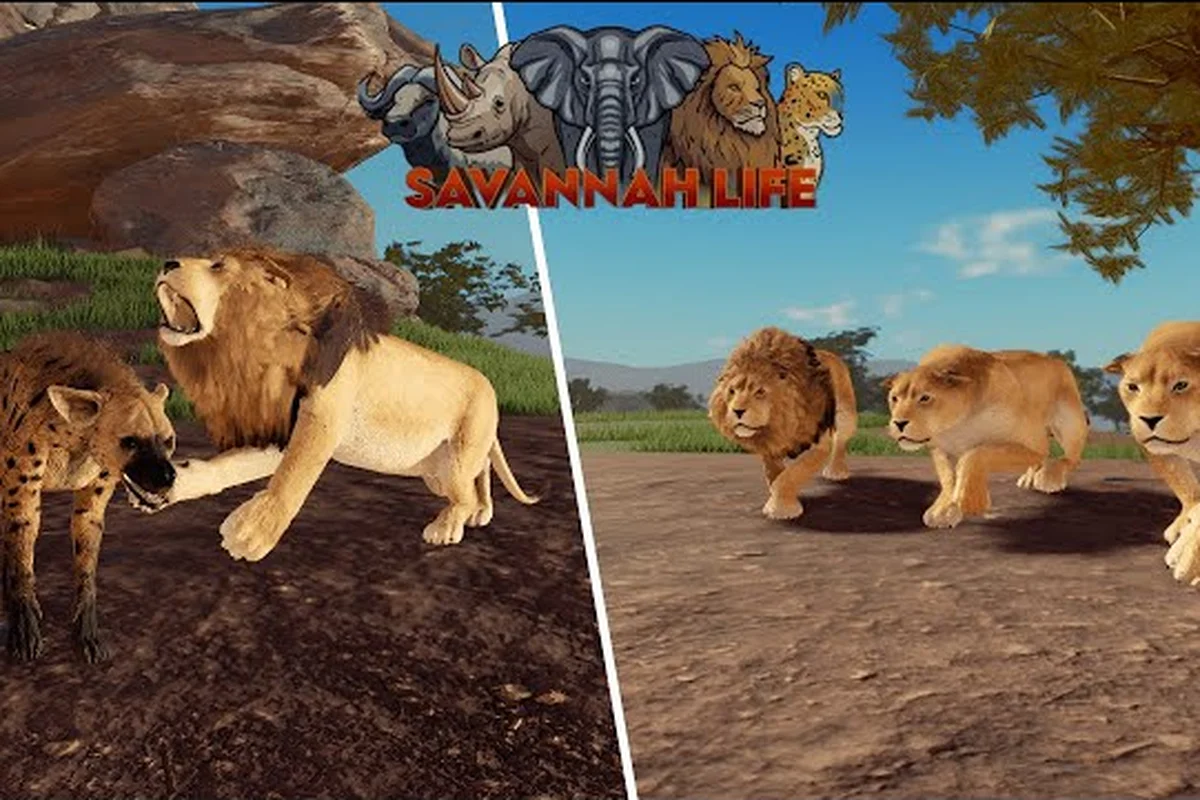
Successful hunts in Savannah Life start long before the first hit lands. The animals that close distance fastest, hold territory longest, and recover stamina between bursts are the ones that consistently turn chases into clean kills. This guide breaks down every combat layer: how the attack key connects to the stamina bar, which predator plays to which prey, the timing windows PvP players exploit on the open plains, and the chase-and-abandon decisions that separate a full belly from a wasted sprint.
A solid foundation in movement, hunger, and thirst keeps the combat layer humming. The Savannah Life survival guide covers how eating, drinking, and resting interact with your stamina pool, which directly affects whether you can finish a chase or stall halfway through. Hunting is where that foundation gets tested, so the sections below move from input mechanics, to prey selection, to PvP duels, and finally to the practical decision tree you will fall back on during long sessions.
Attack Inputs and the Stamina Economy
Every successful hunt in the savannah runs on the same engine: the attack key, the sprint key, and a stamina bar that drains fast and refills slower than most newcomers expect. The official store page notes that combat revolves around the attack key and stamina bar, with players sprinting to close distance, landing hits, and avoiding exhaustion before the prey goes down. That single sentence is the whole game in miniature, because stamina is the resource that turns a chase into either a meal or a wasted afternoon.
Reading the Stamina Bar
Stamina governs three things at once: how fast you can run, how hard you can bite or claw, and how long you can hold a defensive posture. A bar near full lets you sprint, attack, and reposition without penalty. Once the bar crosses roughly the halfway mark, sprint speed begins to taper and the recovery delay between attacks grows. By the time the bar is nearly empty, your attacks will still register, but the cooldown between them stretches so wide that prey has time to flee or another predator has time to close in.
The practical takeaway is that stamina management is the real skill behind any hunt. Sprinting for too long before contact leaves you winded the moment you reach the prey. Holding the sprint while the prey jukes sideways burns stamina for no positional gain. The cleanest pattern, reported by players on the community wiki, is to sprint in short bursts, release the key to walk for two or three steps, then sprint again. This pulse approach keeps the bar in the productive upper third instead of draining it dry on the first approach.
Attack Timing Windows
Each predator species has a slightly different attack animation, but the rhythm is the same: a wind-up, a contact frame, and a recovery frame where you cannot cancel into another input. The wind-up is when the prey can still juke, so committing too early means biting empty air. The contact frame is the damage window, and the recovery frame is when a smart prey animal (or a PvP opponent) will try to sidestep and counter.
Two patterns show up over and over in successful hunts. The first is the bait-and-pounce: walk toward the prey to lull it into a calm stance, then sprint the final gap and attack the instant the sprint key releases. The second is the corner-pinch: drive the prey toward a rock formation, water edge, or another predator so its juke angles are limited, then attack when its movement options collapse. Both patterns reward patience over raw aggression, which fits the stamina logic from the previous subsection.
| Stamina Zone | Bar % | Sprint Speed | Attack Cooldown | Recommended Action |
|---|---|---|---|---|
| Full | 100-80% | Max | Short | Commit to chase, attack on contact |
| Healthy | 79-50% | Near max | Slight delay | Pulse sprint, attack after prey commits to a direction |
| Drained | 49-25% | Reduced | Noticeable gap | Walk only, hold posture, let bar refill before next attempt |
| Critical | 24-0% | Walk pace | Long | Abort chase, hide in cover, recover |
Predator Playstyles and Prey Selection
Not every predator in the savannah is built for the same hunt. NOYO Productions' official blurbs describe how lion prides coordinate, leopards ambush from cover, cheetahs rely on raw speed, and crocodiles strike from below the waterline, and that variety is what makes prey selection feel like a real decision rather than a coin flip. Choosing the right prey for the predator you are playing is the difference between a 20-second kill and a 5-minute chase that ends in a retreat.
Matching Predator to Prey
The savannah's NPC prey animals each carry their own movement speed, stamina pool, and grouping behavior. Impala are fast, skittish, and tend to scatter in a fan when startled, which makes them a bad first target for a low-stamina predator. Zebra are slower but hit harder when cornered, and they tend to clump, which means a single well-timed attack can spook the whole herd. Wildebeest occupy a middle ground: moderate speed, moderate grouping, and a meat payout that rewards a clean kill.
| Predator | Best Prey | Hunting Style | Risk if Stamina Runs Out |
|---|---|---|---|
| Lion (solo) | Wildebeest, zebra | Stalk, pin against terrain | Pride members may steal kill |
| Lion (pride) | Buffalo, zebra | Coordinated pin, take turns attacking | Buffalo counterattack can maim |
| Leopard | Impala, small antelope | Ambush from tree or tall grass | Prey escapes into open plain |
| Cheetah | Impala, gazelle | Open sprint, trip with claws | Cheetah exhausts fastest of all |
| Crocodile | Any prey at water's edge | Drag under from below | Drags attract hyena scavengers |
When to Abandon a Chase
The hardest decision in any hunting guide is knowing when to stop. The community wiki flags this as the most common mistake among new players, and player reports back it up: a chase that has gone past the third sprint pulse, with stamina below 50% and the prey still running clean, is almost always a loss. Walking away recovers stamina, lets the prey calm down so it can be re-engaged later, and avoids the worst-case scenario of being caught flat-footed by a PvP rival or a rival predator while your bar is empty.
A useful rule of thumb: if the prey has changed direction three times since your last attack landed, abandon and reset. The stamina cost of catching a zigzagging target is rarely worth the meat payout, and there will always be another herd on the horizon. If you are playing a pride role, this is also the moment to call for support rather than continuing solo, because a coordinated pin can close a chase that a lone predator cannot.
PvP Combat on the Open Plains
Hunting NPC prey is the tutorial. PvP combat is where the savannah gets competitive, and the rules shift in ways that catch most newcomers off guard. PvP duels happen over contested kills, territorial disputes near water holes, and pride rivalries that turn the whole map into a layered hunting ground. The mechanics are the same (attack key, sprint, stamina bar) but the opponent is reading your inputs and punishing the same tells you would punish on an NPC.
Opening the PvP Duel
The first three seconds of a PvP fight set the tempo. According to community data, most PvP encounters on the open plains are decided in the opening exchange because the player who lands the first attack usually controls the stamina race from there. That makes the opening approach more important than any combo. Walk in at a calm pace, hold your sprint until the gap is short, and attack the instant your opponent commits to their own attack key, because two attacks landing at the same time usually favors the predator with the longer reach.
Three opening patterns see regular use on the plains. The feint-and-punish involves tapping the attack key without committing, then attacking the moment the opponent jukes in anticipation. The mirrored-stance pattern walks in a tight circle around your opponent, forcing them to keep turning, and attacks when their stamina drops from constant repositioning. The terrain-push pattern drives the opponent toward a rock or water edge, the same way you would pin NPC prey, because a cornered PvP player has fewer escape angles.
| PvP Opening | Best Against | Risk | Counter |
|---|---|---|---|
| Feint-and-punish | Aggressive attackers | Whiffed feint leaves you open | Patient defenders who wait for real commit |
| Mirrored-stance | Tired opponents | Drains your own stamina too | Predators with longer reach (lion vs leopard) |
| Terrain-push | Newer players | Can be flanked if opponent is faster | Players with high stamina pool (crocodile) |
| Raw sprint-attack | Slow prey-only players | Eats stamina, no recovery plan | Any player who walks backward to waste your bar |
Mid-Fight Stamina Reads
Once the opening exchange is over, the mid-fight is a stamina duel. Both players are reading each other's bar (visible as a colored line under the character) and adjusting tempo. When your opponent's bar is in the drained zone (under 25%), they cannot sprint away, which means you can close distance freely and force them into a corner. When their bar is in the healthy zone, retreating and resetting your own stamina is the safer play, because committing to a long chase usually tips the stamina race in their favor.
A common mid-fight pattern is the bait-and-retreat. Attack once, then walk backward for two to three seconds. Aggressive opponents will sprint to punish the apparent opening, which drains their stamina and lets you re-engage on equal terms. Patient opponents will hold their ground, in which case you can pulse-sprint to a better angle and resume the opening pattern from the new position. Either way, the goal is to make the other player burn stamina first, because the duel almost always goes to the predator who holds stamina at the moment the kill window opens.
If you are new to the open plains, the Savannah Life gameplay guide walks through how to read the HUD, manage your HUD overlay settings, and find the stamina bar in the first place, which is the single most important skill before any PvP hunt begins.
Pride Combat and Pack Hunting
Solo hunting is a tutorial. Pride combat is the actual game, and the savannah is built around coordinated packs. Players who join a pride can take down buffalo, fend off hyena raids, and contest territory that solo predators simply cannot hold. The mechanics scale up because the stamina bar is per-player, the attack combos chain across multiple predators, and the prey (or rival pride) responds to the whole pack as a single threat.
According to the official Savannah Life game page on Roblox, the savanna hunting experience is built around tracking, stalking, and harvesting wildlife across open grassland biomes.
Coordinating the Pin
The basic pride tactic is a coordinated pin. Two or three lions fan out, drive the prey toward the slowest member of the pride, and attack in alternating bursts so the prey never gets a clean window to counter. The pride members do not all attack at once, because that wastes stamina across the whole pack; instead, one lion engages, the prey turns to face that lion, and the second lion attacks from the flank. The third lion holds stamina in reserve for the final burst once the prey is wounded.
The Savannah Life family roleplay guide covers how to set up a pride structure, assign roles, and communicate during hunts, which is the unglamorous half of pack combat. Without clear roles, pride hunts collapse into a free-for-all where every member burns stamina at once and the prey escapes during the recovery gap.
| Pride Role | Primary Task | Stamina Use | When to Pull Back |
|---|---|---|---|
| Flanker | Drive prey toward pinner | Medium sprint bursts | When prey is committed to pinner |
| Pinner | Hold prey's attention | Steady attacks, no sprint | When stamina drops below 50% |
| Reserve | Final burst, cleanup | One all-out sprint + combo | When pinner retreats |
| Scout | Spot prey, call direction | Walking only | Never, scouts save stamina for the chase |
Defending a Kill from Hyenas
A successful hunt is half the work. The other half is keeping it. Hyena scavengers arrive within seconds of a downed prey, and they test a pride's coordination in a different way than the hunt itself. The defense pattern is to spread out around the carcass so hyenas cannot approach from a single blind angle, with each pride member holding a different quadrant. Attacks land only when a hyena enters your quadrant, which conserves stamina across the pride and prevents the kind of pile-up that lets one bold hyena grab a mouthful while the rest of the pride is recovering.
Community reports flag the carcass defense as the moment where pride coordination either proves itself or falls apart. A pride that hunted well but defends poorly walks away hungry, which is the worst possible outcome. Coordinating a kill that you cannot defend is wasted effort, and the smarter pride will abandon a contested carcass rather than burn stamina fighting scavengers that can be re-engaged at the next hunt.
Advanced Combat Patterns and Edge Cases
Once the basics of attack timing and stamina reads are second nature, the savannah opens up a layer of edge-case combat that separates good players from great ones. These patterns show up in late-game hunts, contested water holes, and pride wars that stretch across multiple sessions. They are not taught explicitly, but they emerge from a few core principles: read the bar, control the terrain, and never commit stamina you cannot recover.
Water Hole Duels
Crocodile combat happens almost entirely at the waterline, and it breaks the assumptions of plain hunting. A croc in the water is nearly invisible until prey steps in to drink, at which point the drag-under attack is nearly impossible to escape. The counter, reported by experienced players, is to approach the water at an angle rather than walking straight in, watch for the ripple pattern of a submerged croc, and never attack a croc in deep water because its stamina pool refills while yours drains. Croc-vs-croc fights at the waterline are stamina wars where the loser is the one who surfaces first.
Territory Wars Between Prides
The most chaotic PvP environment in the savannah is the territory war between two prides. Multiple predators are attacking, defending, and repositioning at once, and the stamina bar becomes a shared resource across the whole pride. The pattern that works, according to community testing, is to designate a "point" predator in each pride who leads the engage, with the rest of the pride holding stamina in reserve. Point predators cycle out when their bar drops, which keeps the pride's overall attack pressure constant instead of spiking and crashing.
| Edge Case | Primary Risk | Winning Pattern |
|---|---|---|
| Croc in water | Hidden drag-under | Angle approach, watch ripples, never attack in deep water |
| Hyena raid on carcass | Stamina drain across pride | Quadrant defense, attack on entry, not on chase |
| Two-pride war | Stamina spikes and crashes | Point predator cycles, reserves hold bar |
| Buffalo counterattack | Heavy damage to attacker | Two-pride pin, never solo engage |
| Cheetah sprint fail | Empty bar mid-chase | Pulse sprint, abandon after third pulse |
The beginner-level fundamentals are covered in the Savannah Life Roblox beginner guide, which is worth a read before tackling the edge-case patterns above. Most of these scenarios are punishing to learn by trial and error, and a quick read through the basics saves a few real-world stamina bars.
Putting it all together, the heart of any solid hunt is a handful of repeatable choices: read the stamina bar before committing, pick prey that matches your predator's strengths, walk away from chases that have already cost too much, coordinate with pride members instead of solo charging, and treat carcass defense as seriously as the hunt itself. The mechanics are simple, but the decision tree is layered, and the players who climb the learning curve fastest are the ones who make those choices deliberately rather than reactively. Once the patterns above become muscle memory, the savannah stops feeling like a hostile open plain and starts feeling like a territory you actually control.
Frequently Asked Questions
What is the most important stat to watch during a hunt?
The stamina bar is the single most important stat to watch during a hunt, because it controls sprint speed, attack cooldown, and recovery time all at once. Most failed chases in the savannah come down to a stamina bar that hit zero halfway through the approach, not a poorly timed attack. Keep the bar in the upper half during the chase and the lower half becomes a non-issue.
Which predator is best for new players learning to hunt?
The leopard is the best predator for new players learning to hunt, because its ambush style lets you take prey from cover instead of chasing it across the open plain. That built-in patience trains good habits early, and the leopard's stamina pool is forgiving enough that mistakes do not instantly end a hunt. Once the ambush timing is second nature, switching to a cheetah or solo lion becomes much easier.
How do I win a PvP fight against a player with higher stamina?
You win by reading their stamina bar and forcing them to spend it before you commit. Bait-and-retreat patterns make aggressive opponents sprint to punish a fake opening, which drains their stamina advantage. By the time their bar is in the drained zone, your healthy bar lets you close the gap and land the deciding combo without giving them a recovery window.
Can pride hunting work with random players?
Pride hunting with random players is unreliable, because the coordination patterns above depend on clear roles and quick communication. Random pride members tend to all-engage at once, which wastes stamina and lets prey escape during the recovery gap. If you must hunt with randoms, focus on being the pinner or reserve so your own stamina stays productive even when the rest of the pride collapses.
What should I do if my stamina bar is empty during a PvP fight?
If your stamina bar empties during a PvP fight, the correct move is to walk to cover, not to keep attacking. Empty-bar attacks land but the recovery window is long enough that any opponent with stamina can land a free counter. Hide behind a rock or in tall grass, let the bar refill to at least the halfway mark, and re-engage from a new angle rather than continuing the same duel.